
Epilepsy & Seizures:
Comprehensive Diagnosis and Long-Term Management…
All You Need To Know About Epilepsy & Seizures
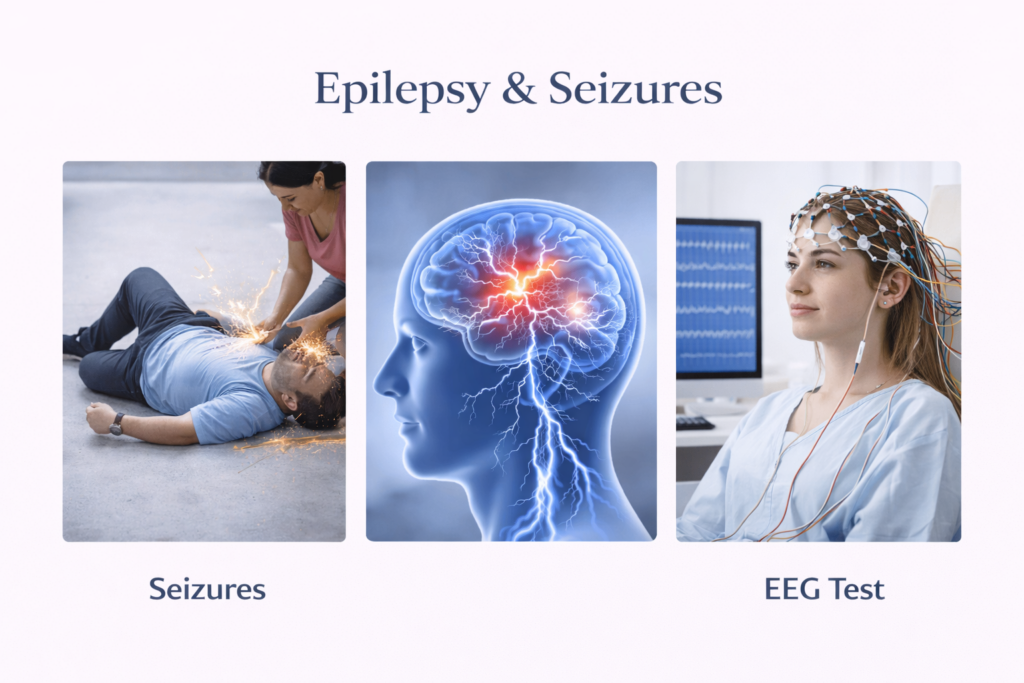
Epilepsy is a neurological condition characterized by recurrent, unprovoked seizures caused by sudden bursts of abnormal electrical activity in the brain. Seizures can appear in many forms — from brief staring spells and sudden jerking movements to loss of awareness or full body convulsions. Because seizure symptoms can vary widely, accurate diagnosis is essential.
A detailed history, brain imaging, and tests like EEG (electroencephalogram) help identify the type and cause of seizures. Treatment is tailored to each individual and often includes anti-seizure medications that help control abnormal brain activity. With proper treatment, many people with epilepsy can live normal, active lives. In some cases, additional options such as dietary therapy, devices, or surgery may be considered. Long-term care also involves lifestyle guidance, safety precautions, and regular follow-up. The goal is not only seizure control but also improving quality of life, independence, and confidence.
Stay calm, ensure the person is in a safe position (preferably on their side), and avoid putting anything in their mouth. Seek medical help if the seizure lasts more than 5 minutes or if it is their first episode.
While epilepsy may not always be permanently cured, it can be effectively controlled with medications. Many patients become seizure-free with appropriate treatment and regular follow-ups.
Diagnosis may include a detailed clinical evaluation, EEG (Electroencephalogram), and brain imaging such as MRI to identify the cause and type of seizure.
Yes. With timely treatment, lifestyle guidance, and medication adherence, most individuals with epilepsy can study, work, travel, and live independently.
Seizure symptoms can vary. They may include sudden jerking movements, brief loss of awareness, staring spells, confusion, unusual sensations, or sudden falls depending on the type of seizure.
No. Seizures are broadly classified as focal (starting in one part of the brain) or generalized (involving both sides of the brain). Accurate diagnosis helps determine the most effective treatment plan.
Common triggers include lack of sleep, stress, missed medications, infections, flashing lights (in some individuals), and alcohol consumption. Identifying triggers helps in better seizure control.
Yes. Epilepsy can occur at any age, but causes, seizure types, and treatment approaches may differ between children and adults. Early diagnosis is crucial in both age groups.
You should consult a neurologist if you experience a first seizure, recurrent episodes, unexplained loss of consciousness, or if seizures are not controlled with medication.