
SPINE PROBLEMS
(NECK & BACK PAIN)
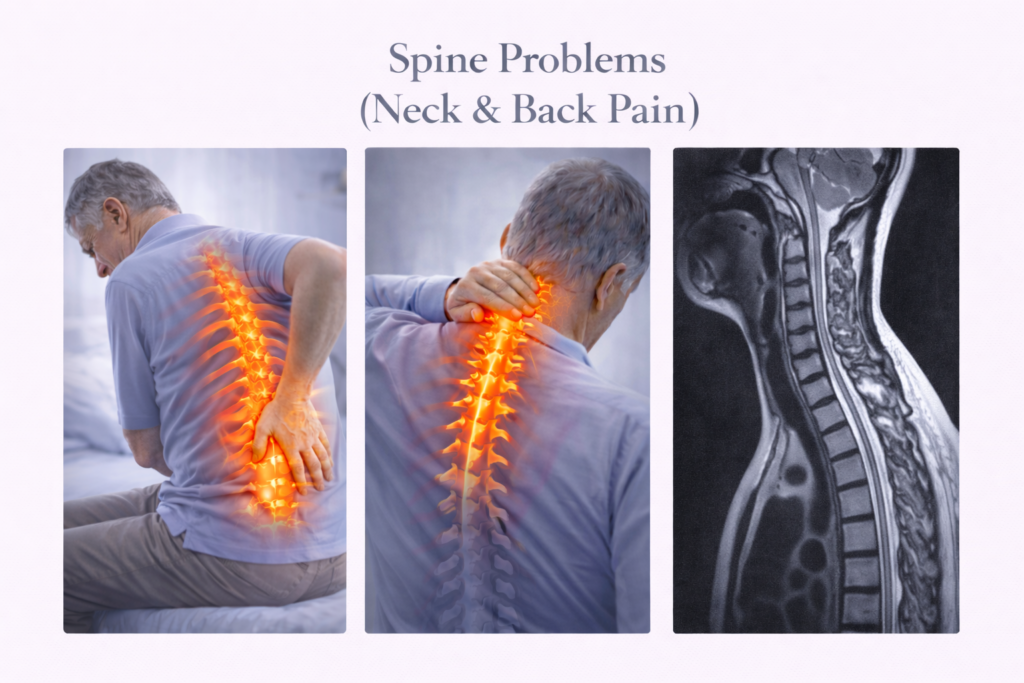
All You Need To Know About SPINE PROBLEMS (NECK & BACK PAIN)
Neck and back pain are common problems, but when they are associated with nerve compression, they can cause additional symptoms such as radiating pain, numbness, tingling, or weakness in the arms or legs. Spine-related neurological issues often result from disc problems, age-related degeneration, injuries, or structural changes in the spine.
A thorough evaluation helps determine whether pain is muscular or related to nerve involvement. Imaging studies such as MRI may be required when nerve compression is suspected. Treatment is usually conservative at first and may include medications, physiotherapy, posture correction, and lifestyle modifications.
Only a small percentage of patients require surgical intervention, and this decision is made after careful evaluation. Early diagnosis and appropriate management can relieve pain, prevent worsening symptoms, and improve mobility. The aim is to restore comfort and function while avoiding unnecessary procedures whenever possible.
You should seek medical evaluation if you experience persistent neck or back pain, radiating pain to the arms or legs, numbness, tingling, weakness, or difficulty walking.
Common conditions include slipped disc (disc prolapse), cervical or lumbar spondylosis, spinal stenosis, sciatica, and nerve root compression.
Sciatica refers to pain that radiates from the lower back down the leg due to irritation or compression of the sciatic nerve.
Diagnosis typically involves a detailed clinical examination along with imaging studies such as MRI or CT scan to identify the exact cause and severity.
No. Most spine conditions can be managed effectively with medications, physiotherapy, lifestyle modifications, and guided rehabilitation. Surgery is considered only in selected cases.
Red flag symptoms include sudden weakness in the limbs, loss of bladder or bowel control, severe trauma, or rapidly worsening pain — these require immediate medical attention.
Yes. Structured physiotherapy and strengthening exercises play a crucial role in improving flexibility, reducing pain, and preventing recurrence.
Maintaining good posture, regular exercise, weight control, ergonomic workspace setup, and avoiding heavy lifting can significantly reduce recurrence.