
Parkinson’s Disease & Movement Disorders
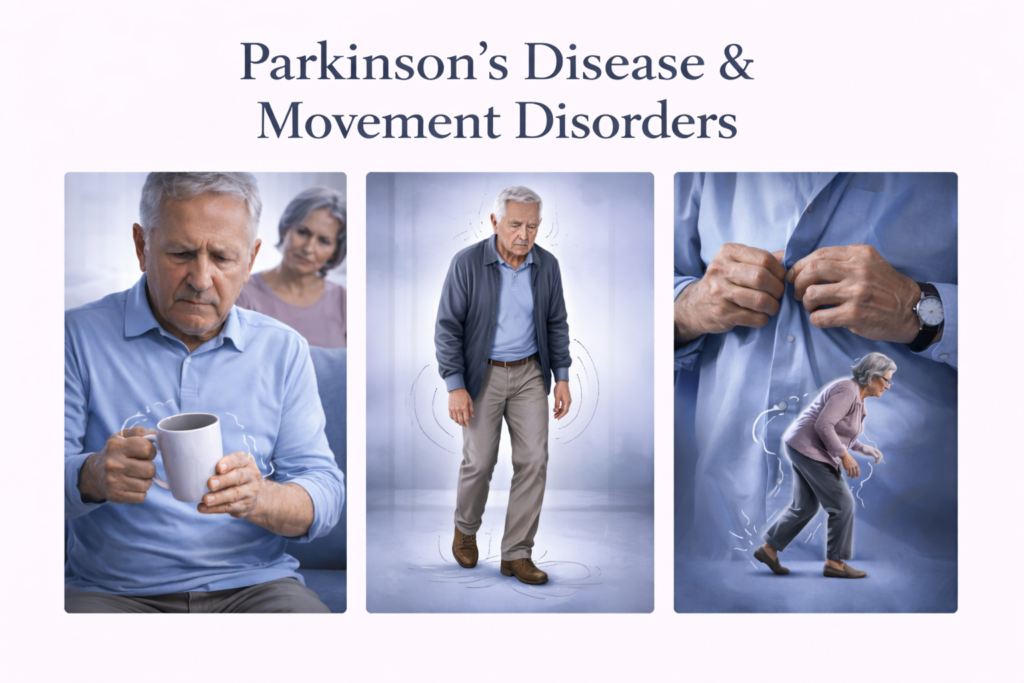
All You Need To Know About Parkinson’s Disease & Movement Disorders
Parkinson’s disease is a progressive neurological condition that affects movement. It commonly presents with tremors, slowness of movement, muscle stiffness, and balance difficulties. However, Parkinson’s is more than just a movement disorder — it can also affect sleep, mood, memory, and autonomic functions.
Early diagnosis allows for timely treatment that can significantly improve daily functioning. Medications help replenish or mimic dopamine, a brain chemical involved in movement control. Treatment plans are highly individualized and may change over time as symptoms evolve. In addition to medication, physiotherapy, speech therapy, and lifestyle adjustments are important parts of care.
Movement disorders also include conditions like dystonia, tremors, tics, and chorea, each requiring specialized evaluation. With expert neurological management, many patients can maintain independence and lead active lives. Ongoing follow-up ensures that treatment remains effective and aligned with changing needs.
You should seek medical evaluation if you notice persistent tremors, stiffness, slowed movements, balance issues, or changes in handwriting, speech, or walking pattern.
Early symptoms may include mild tremors (often in one hand), stiffness, slowness of movement, reduced facial expression, soft speech, and difficulty with fine motor tasks.
Diagnosis is primarily clinical, based on detailed history and neurological examination. In selected cases, imaging studies may be advised to rule out other causes.
Parkinson’s disease is a chronic neurological condition and currently has no permanent cure. However, symptoms can be effectively managed with medications, therapy, and regular follow-up care.
Treatment may include medications to improve dopamine levels, physiotherapy, speech therapy, lifestyle guidance, and in select cases, advanced therapies such as Deep Brain Stimulation (DBS).
Movement disorders include conditions such as essential tremor, dystonia, chorea, tics, and other disorders affecting coordination and muscle control.
Yes. Although more common after the age of 60, Parkinson’s can occur in younger individuals (young-onset Parkinson’s disease) and requires specialized management.
Regular exercise, physiotherapy, and balance training significantly help improve mobility, flexibility, and overall quality of life in patients with movement disorders.