
Neurodiagnostic Testing
All You Need To Know About Neurodiagnostic Testing
Neurodiagnostic tests help doctors understand how the brain, nerves, and muscles are functioning. These tests are crucial for confirming a diagnosis, assessing severity, and guiding treatment decisions.
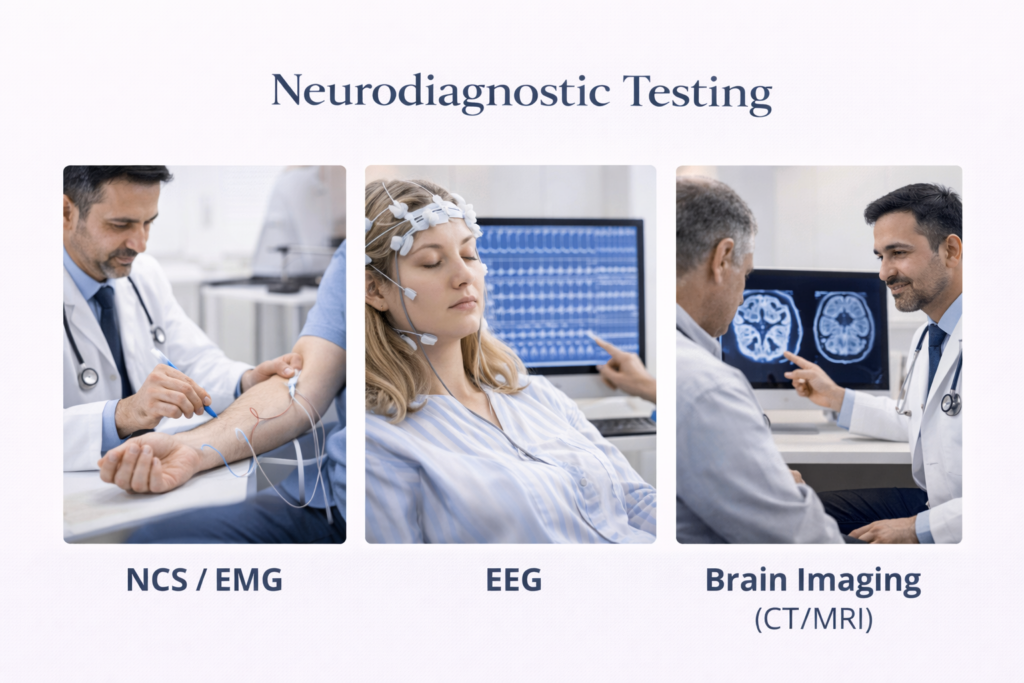
Common neurodiagnostic tools include EEG to study brain electrical activity in epilepsy, nerve conduction studies and EMG to evaluate nerve and muscle function, and imaging tests like MRI or CT scans to visualize the brain and spine. Each test provides different information, and not every patient needs all of them.
These procedures are generally safe and are performed with patient comfort in mind. Accurate testing allows for precise diagnosis, avoids unnecessary treatments, and ensures that care is tailored to each individual. Advanced diagnostic facilities play a key role in delivering high-quality neurological care.
Neurodiagnostic testing refers to specialized investigations used to evaluate the functioning of the brain, spinal cord, nerves, and muscles to accurately diagnose neurological conditions.
These tests are advised when patients experience symptoms such as seizures, weakness, numbness, tremors, memory problems, balance issues, or unexplained neurological complaints.
Common tests include EEG (Electroencephalogram), Nerve Conduction Study (NCS), Electromyography (EMG), Evoked Potentials, and imaging studies like MRI or CT scan.
Most neurodiagnostic tests are safe and well-tolerated. Some tests like NCS or EMG may cause mild, temporary discomfort, but they are generally safe procedures.
Preparation depends on the specific test. You may be advised to avoid certain medications, wash your hair before an EEG, or wear loose clothing for nerve studies.
The duration varies depending on the test. EEG may take 30–60 minutes, while NCS/EMG can take 30–90 minutes depending on the complexity.
Results are typically reviewed and explained during a follow-up consultation, where a personalized treatment plan is discussed.
Not always. Neurodiagnostic tests are recommended only when clinically indicated, based on symptoms and examination findings.