
Multiple Sclerosis
& Demyelinating Disorders
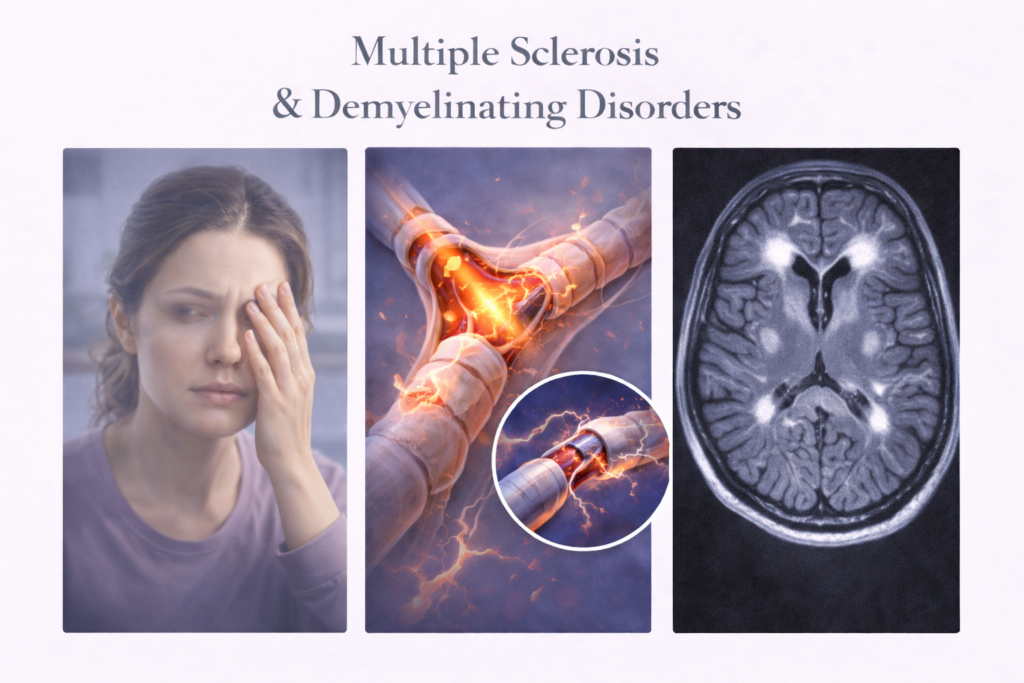
All You Need To Know About Multiple Sclerosis & Demyelinating Disorders
Multiple sclerosis (MS) is an autoimmune condition in which the immune system mistakenly attacks the protective covering of nerves in the brain and spinal cord. This disrupts communication within the nervous system and can cause symptoms such as vision problems, weakness, numbness, imbalance, and fatigue.
MS often affects young adults and may follow a relapsing and remitting course. Early diagnosis through clinical evaluation, MRI scans, and other tests is important because disease-modifying therapies can reduce relapses and slow progression.
Treatment also focuses on managing symptoms, maintaining mobility, and supporting mental health. Physiotherapy, occupational therapy, and counseling are valuable parts of care. With modern treatment options and regular follow-up, many people with MS lead active and fulfilling lives. Early and continuous neurological care makes a significant difference in long-term outcomes.
You should seek medical evaluation if you experience symptoms such as persistent vision problems, limb weakness, numbness, imbalance, double vision, or episodes of neurological deficits that improve and recur.
Symptoms may include vision disturbances, fatigue, limb weakness, tingling sensations, coordination difficulties, bladder problems, and episodes of relapse followed by partial recovery.
Diagnosis involves detailed clinical evaluation, MRI of the brain and spinal cord, and sometimes additional tests such as lumbar puncture or evoked potential studies.
Currently, MS is not curable. However, disease-modifying therapies can reduce relapse frequency, slow disease progression, and help maintain quality of life.
Other demyelinating conditions include Neuromyelitis Optica (NMO), Acute Disseminated Encephalomyelitis (ADEM), and MOG antibody-associated disorders.
Treatment may include corticosteroids for acute relapses, disease-modifying therapies, symptomatic management, physiotherapy, and long-term neurological follow-up.
Yes. MS commonly affects young adults, particularly between 20 and 40 years of age, and early diagnosis plays a crucial role in long-term management.
With early diagnosis, appropriate therapy, rehabilitation, and lifestyle adjustments, many patients are able to lead active and productive lives.