
Dementia &
Memory Problems
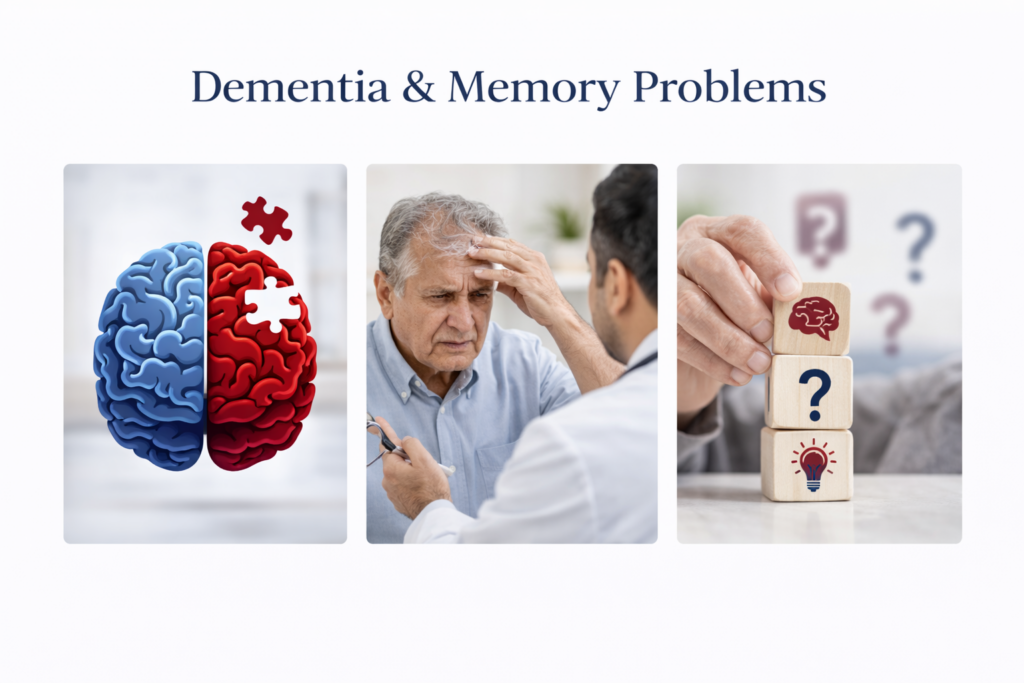
All You Need To Know About Dementia & Memory Problems
Memory problems can occur for many reasons, ranging from stress and vitamin deficiencies to neurodegenerative conditions such as Alzheimer’s disease. Occasional forgetfulness can be normal, but persistent memory decline, difficulty managing daily tasks, or changes in behavior should be evaluated.
Dementia is not a single disease but a group of conditions that affect memory, thinking, and social abilities severely enough to interfere with daily life. Early assessment is important because some causes of memory impairment are treatable or reversible. Evaluation includes cognitive testing, brain imaging, and laboratory investigations to identify underlying factors.
While some forms of dementia cannot be cured, medications and supportive therapies can slow progression and improve quality of life. Counseling families, ensuring safety, and planning long-term care are also essential. Early diagnosis empowers patients and families to make informed decisions and access appropriate support.
You should seek medical evaluation if memory loss is frequent, worsening, affecting daily activities, or associated with confusion, personality changes, or difficulty managing routine tasks.
No. Memory issues can occur due to stress, depression, vitamin deficiencies, thyroid disorders, medication side effects, or sleep disturbances. Proper evaluation is essential to identify the cause.
Early signs may include difficulty remembering recent events, repeating questions, trouble finding words, disorientation in familiar places, and changes in mood or behavior.
Diagnosis involves a detailed clinical history, cognitive assessment, neurological examination, blood tests, and brain imaging such as MRI when required.
Most forms of dementia are progressive and currently not curable. However, early diagnosis and appropriate treatment can slow progression and improve quality of life.
Treatment may include medications to support memory, management of behavioral symptoms, cognitive therapy, lifestyle modification, and caregiver guidance.
Yes. Although more common in older adults, certain conditions can cause early-onset dementia or reversible memory impairment in younger individuals.
Providing a structured routine, ensuring medication adherence, maintaining a safe environment, encouraging mental engagement, and seeking regular medical follow-up are essential.