
STROKE
Advanced care for stroke and complex brain disorders.
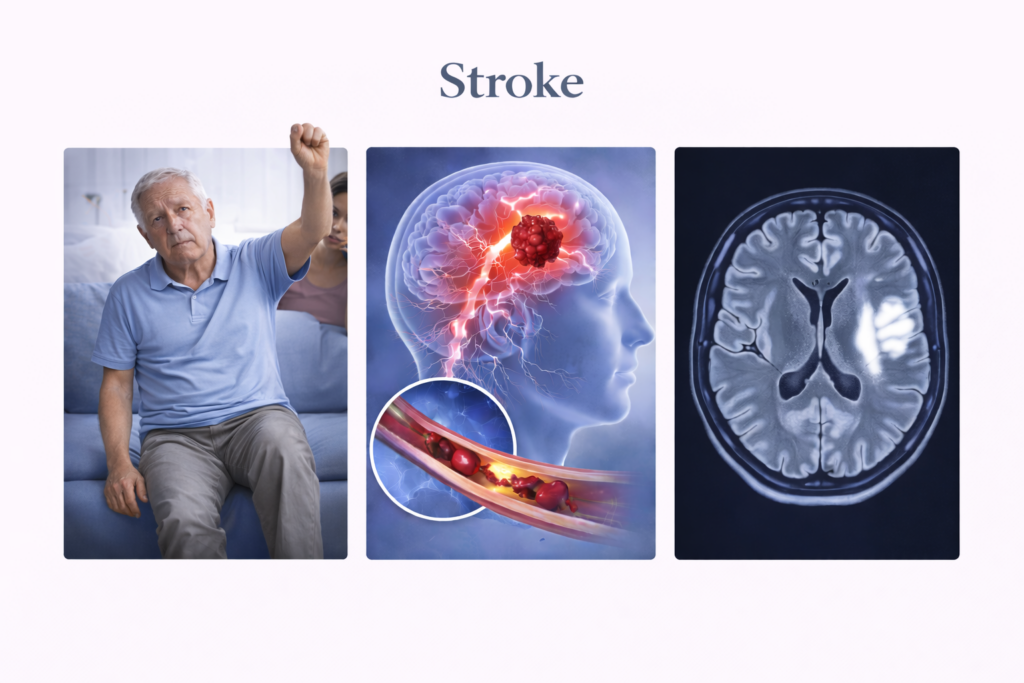
All You Need To Know About Stroke
A stroke is a medical emergency that occurs when blood flow to a part of the brain is suddenly blocked or when a blood vessel bursts. Every minute matters, because brain cells begin to suffer damage very quickly. Early recognition of warning signs such as sudden weakness on one side of the body, slurred speech, facial drooping, vision problems, or severe dizziness can be life-saving.
Advanced stroke care involves rapid diagnosis with brain imaging, timely treatment to restore blood flow when possible, and careful monitoring to prevent complications. Beyond the emergency phase, stroke management includes identifying the cause, controlling risk factors like blood pressure, diabetes, and cholesterol, and starting medications to prevent future strokes. Rehabilitation is also a key part of recovery, helping patients regain strength, speech, and independence. With expert neurological care, many stroke patients can achieve significant recovery and reduce their risk of recurrence.
A stroke occurs when blood supply to a part of the brain is suddenly interrupted, leading to brain cell damage. It is a medical emergency requiring immediate treatment.
Use the FAST rule:
F – Face drooping
A – Arm weakness
S – Speech difficulty
T – Time to act immediately
Other symptoms:
Sudden weakness on one side of body
Sudden loss of vision
Severe headache
Loss of balance or giddiness
There are mainly three types:
Ischemic Stroke – due to blockage (most common)
Hemorrhagic Stroke – due to bleeding in brain
TIA (Mini-stroke) – temporary blockage, warning sign
Do NOT wait or observe
Rush to the nearest hospital immediately
Treatment is most effective within the first 4.5 hours (golden window)
Yes. Treatments include:
Clot-busting injection (thrombolysis)
Mechanical clot removal (thrombectomy)
ICU care and monitoring
Long-term rehabilitation
Common risk factors include:
High blood pressure (most important)
Diabetes
High cholesterol
Smoking
Heart disease
Obesity and sedentary lifestyle
Yes, prevention is very effective:
Control BP, sugar, cholesterol
Quit smoking
Regular exercise
Healthy diet
Regular health check-ups
Patients may experience:
Weakness or paralysis
Speech difficulty
Memory problems
Swallowing issues
Recovery depends on early treatment and rehabilitation.
Recovery varies:
Some improve in weeks
Others may take months
Early physiotherapy and rehab significantly improve outcomes
Yes, increasing in younger patients due to:
Stress
Lifestyle factors
Clotting disorders
Cardiac conditions