
Vertigo, Giddiness
& Balance Disorders
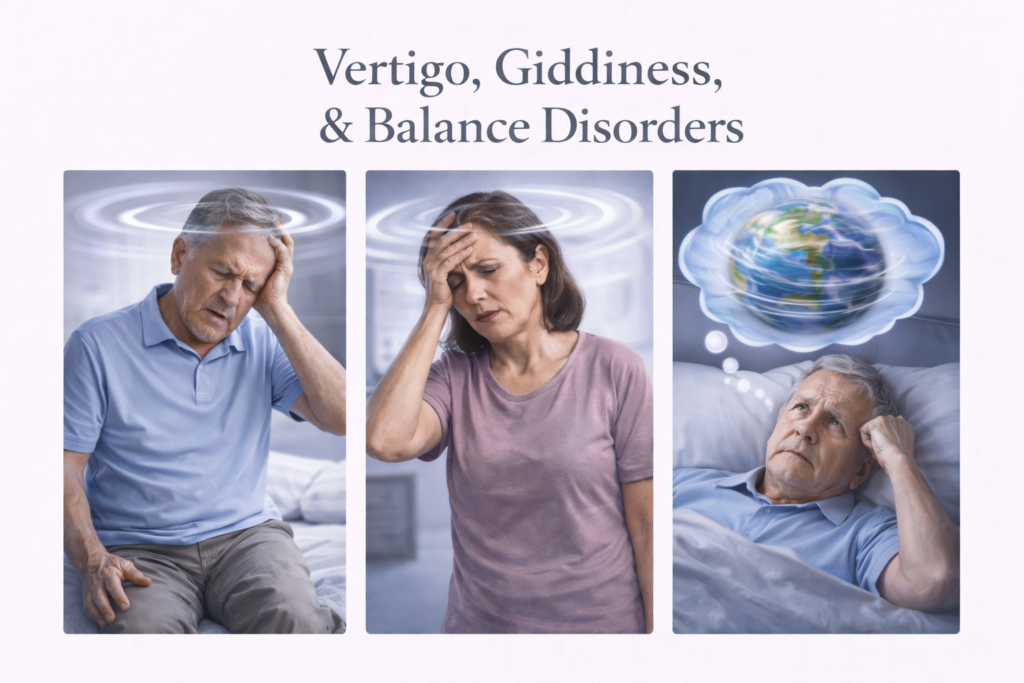
All You Need To Know About Vertigo, Giddiness & Balance Disorders
Vertigo is a sensation of spinning or movement when no actual motion is occurring. It may be accompanied by nausea, imbalance, or unsteadiness while walking. Vertigo can arise from inner ear problems, nerve disorders, or brain conditions, making proper evaluation very important.
Not all dizziness is vertigo. Some people experience lightheadedness, fainting sensations, or imbalance due to blood pressure changes or other medical issues. A careful history and examination help identify the exact cause. Specialized tests may be needed to evaluate balance function and rule out neurological conditions.
Many causes of vertigo, such as benign positional vertigo, can be effectively treated with simple maneuvers and medications. Others may require vestibular rehabilitation therapy. Accurate diagnosis not only relieves symptoms but also reduces anxiety and prevents falls, especially in older adults.
You should seek medical attention if dizziness is recurrent, severe, associated with vomiting, headache, double vision, weakness, difficulty walking, or if it affects daily activities.
Vertigo is a spinning sensation, as if you or your surroundings are moving. General dizziness may feel like lightheadedness, imbalance, or faintness. Proper evaluation helps identify the exact cause.
Common causes include inner ear disorders (such as BPPV), vestibular neuritis, migraine-associated vertigo, cervical issues, and less commonly, neurological conditions affecting the brain.
Diagnosis involves a detailed history, neurological examination, balance assessment, and in some cases, imaging studies such as MRI to rule out serious causes.
Yes. Treatment depends on the cause and may include specific repositioning maneuvers, medications, vestibular rehabilitation exercises, and management of underlying conditions.
Most vertigo episodes are not due to stroke. However, sudden severe vertigo associated with weakness, slurred speech, double vision, or difficulty swallowing requires immediate emergency care.
Yes. Anxiety and stress can contribute to sensations of lightheadedness or imbalance, but it is important to rule out medical causes first.
Following prescribed exercises, maintaining hydration, managing stress, treating underlying conditions, and attending regular follow-ups can help reduce recurrence.